MCC Panels
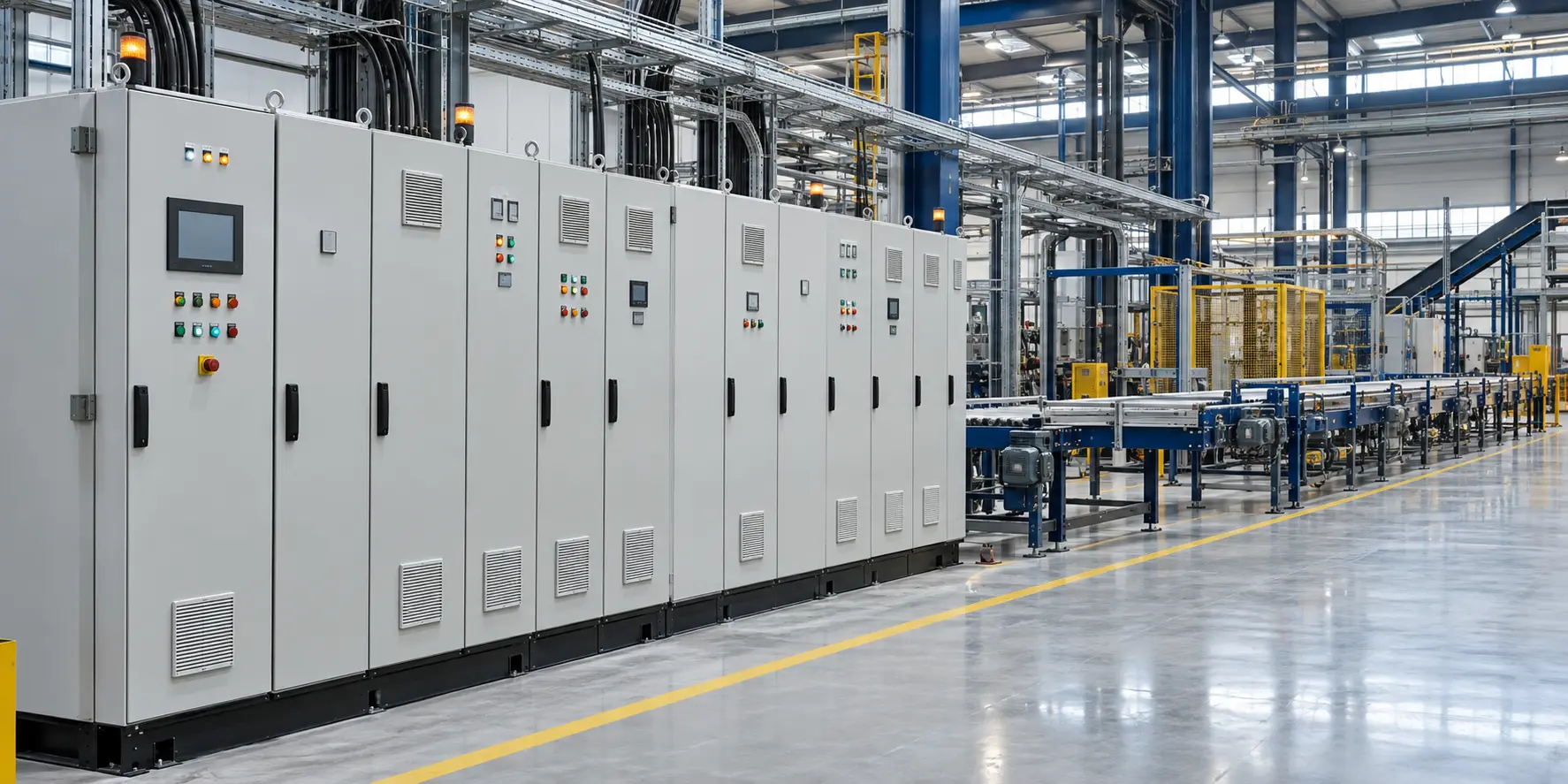
Centralize the protection, starting and control of multiple motors across process plants, utilities and material-handling systems.
DOL / star-delta / soft starter / VFD · local/remote control · PLC interface

Application engineering
FTS develops application panels that coordinate drives, motors, sensors, actuators, protection and operator controls into a practical operating system.
Eleven focused use cases
Each solution begins with the required sequence, permissives, trips, operating modes and site interfaces. The examples below describe typical functions; the final scope is project-specific.
Centralize the protection, starting and control of multiple motors across process plants, utilities and material-handling systems.
Receive and distribute LT power through coordinated incomers, bus sections, couplers and high-current outgoing feeders.
Manage safe low-voltage distribution for production areas, utilities and infrastructure with clear isolation and load segregation.
Coordinate drawing blocks, capstans, pay-off and take-up sections where drive matching, line speed and tension stability are critical to product quality.
Control extruder motor loads, heater zones, cooling devices and downstream equipment with startup permissives and temperature-dependent logic.
Operate single or multiple pumps based on level, pressure, flow or demand, while managing dry-run, overload and duty rotation requirements.
Coordinate conveyor movement with pretreatment, oven, booth, ventilation and utility sections so dependent systems run in the correct order.
Sequence conveyor zones, transfer points and associated equipment with permissives, jam monitoring and emergency-stop integration.
Coordinate multiple generator sets or generator-to-bus connection through voltage, frequency and phase matching with controlled breaker operation.
Prioritize, add or shed electrical loads according to source capacity, operating conditions and plant-defined priority logic.
Detect mains failure, start the standby generator, transfer the load and restore the normal source with configurable delays and safety interlocks.
Controls that fit the operation
A useful control philosophy explains what the system should do—not only which hardware it contains.
Send the operating description, I/O list, motor schedule or existing drawing. We will help identify the control architecture and quotation inputs.